Although they look like a root veg, kohlrabi is actually a brassica; its a bulb at the base of swollen stem. It has a crisp, fresh flavour and texture, similar to broccoli stem or young turnips. In fact, kohlrabi in
German means cabbage turnip. Even though they do look a bit weird, they’re really easy to prepare; if you have young, organic ones you don’t even need to peel it.
 to do with it? Combined with grated carrots, grated kohlrabi makes a beautiful fresh, crunchy coleslaw with a slightly different flavour – add in a little thinly sliced onion and some toasted black mustard seeds, pumpkin, sunflower and sesame seeds and it’s coleslaw with different flavours and textures. Kohlrabi also works brilliantly with sliced potato to make a gratin – a dish that is not so easy to make dairy free, but with the help of a recipe by Hugh Fearnley-Whillingstall, a good non-dairy milk and a bit of adaptation, anything is possible!
I had some nut cheese http://foodiesensitive.blogspot.co.uk/2012/11/dairy-and-yeast-free-pizza-its-tasty.html made up in the fridge so used that for the topping, but you could just use bread crumbs (gluten free if needed) and dairy free spread if you don’t have a cheese alternative to hand – it will still be gorgeous!
Dairy free kohlrabi and potato gratin
1 tablespoon olive oil
2 onions sliced
1-2 cloves garlic, sliced
some dairy free spread for greasing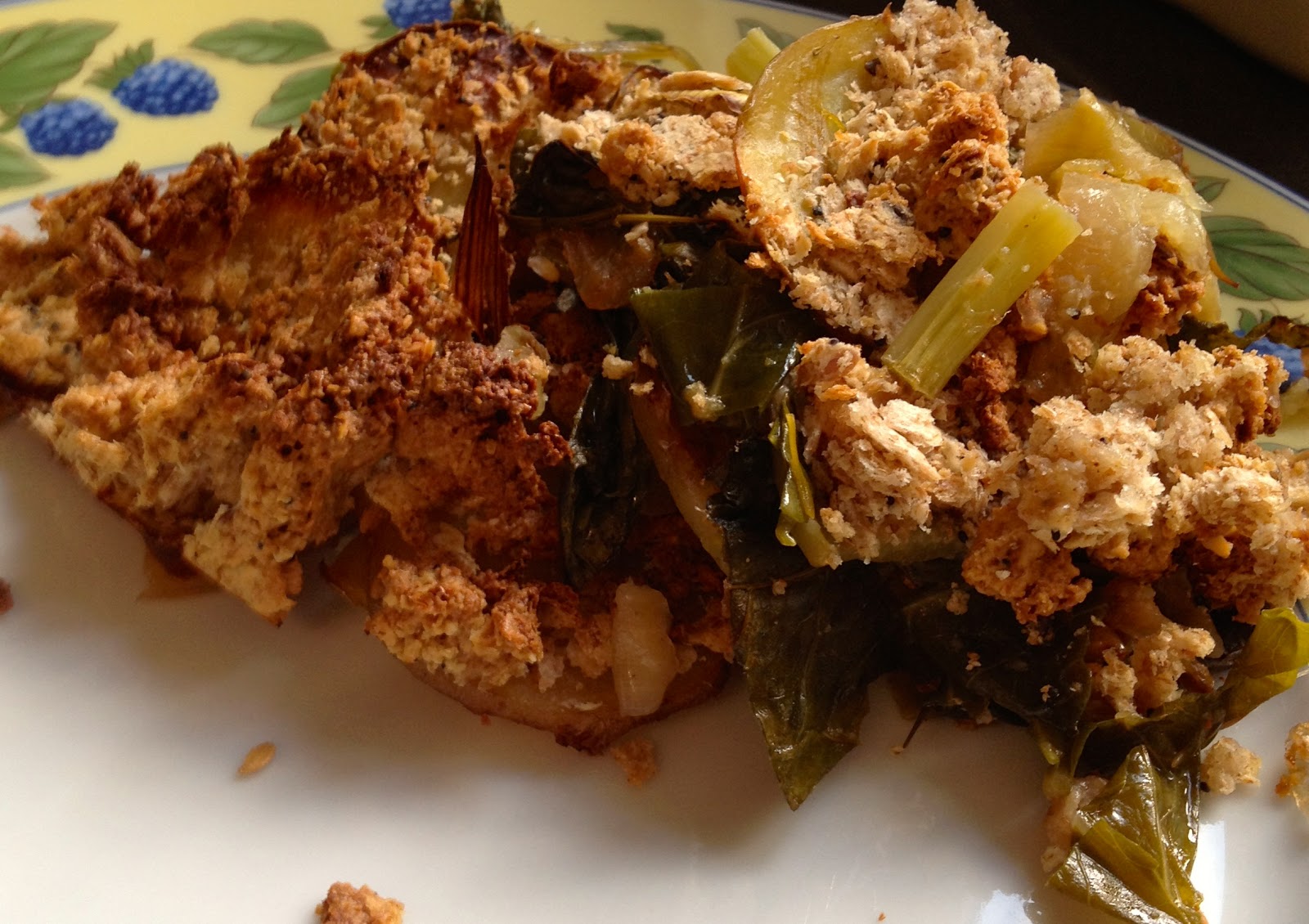
1 medium sized kohlrabi, finely sliced
1 large potato, finely sliced
1 teaspoon thyme
200mls dairy free milk
200mls veg stock
salt and pepper
kohlrabi leaves chopped
handful spinach, chopped (optional)
Topping:
70g bread crumbs (or alternatives)
20g butter
40g nut cheese (optional)
First, pre heat the oven to 190oC then heat the oil in a large frying pan and saute the onion with a little salt on a low heat until they are soft and slightly caramelised (about 12 minutes or so). Add the garlic and cook through for a few minutes but don’t let it burn, then the kohlrabi, potato and thyme and cook for another 5 minutes. Pour in the veg stock and non dairy milk and cook over a medium heat until the fluid has reduced by half. Season well. Generously grease a large oven proof dish with the dairy free spread and carefully pour in the gratin mix. Blitz the breadcrumbs, non-dairy spread, seasoning and nut cheese (if using) together in a blender and sprinkle over the top. Place in the oven and bake for 30 minutes or so until the gratin is bubbling and browned on top.
* As I have an intolerance to yeast as well as dairy, normal breadcrumbs are a none starter, so I blitz up a wholewheat wrap or tortilla to make the crumbs. If you have a wheat allergy, there are gluten free breadcrumbs available on the market, or of course blitz your gluten free bread!
 itamin C, they are trumped by peppers and greens. I was amazed to discover that the best source by far is peppers – chilli, bell, all sorts and of all colours. This is swiftly followed by those marvellous greens – kale, spring greens, broccoli, watercress, sprouts – again the list can go on. The best fruits are actually blackcurrants and strawberries, which is great at this time of year in the UK, as strawberry season is upon us and I’m in strawberry heaven!! There’s nothing quite like a freshly picked, succulently sweet British strawberry!