A wee bit of vegan haggis

It’s this time of year that anyone you know who is Scottish, or has some Scottish heritage, or just fancies a mighty fine feast on a cold winters night, celebrates Burn’s night. Held in memory of the poet, Robbie Burns, the evening has many traditions, including piping in the diners (if you happen to know anyone who plays the bagpipes of course!), drinking lots of whiskey and eating haggis.

When I was young, I used to think that haggis was a small furry animal, but actually its a mix of sheep offal mixed with onion, oats and spices, then stuffed in a sheep stomach and simmered in a pot for 3 hours. I have eaten it a couple of times in the past and its rich and seriously filling.

These days, however, being a plant based eater, haggis is generally off the menu, although vegetarian ones are sometimes available in the supermarket. On a recent trip to Edinburgh, however, we stopped at a fabulous vegetarian restaurant called Henderson’s and my husband chose a delicious haggis dish. In fact it was so good, he decided to recreate it at home for a birthday dinner party the other week. Served with mashed tatties and neeps, it was our own little plant based Burns night supper, super tasty and super healthy.

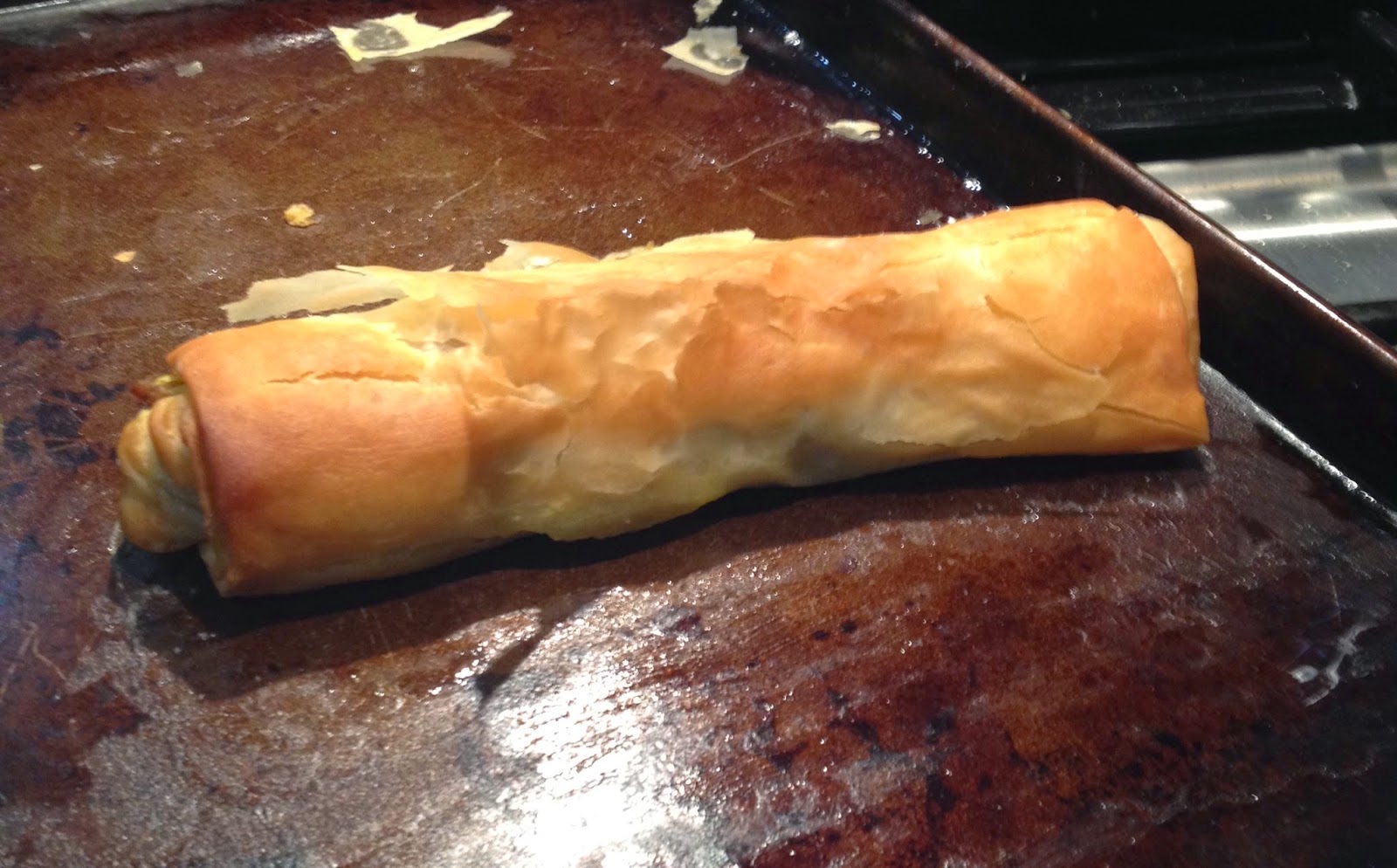
Once made up, the haggis mix does look a little grey and unappealing, despite it’s amazing flavour, and not having any plant versions of sausage skins to hand (are there any?) we decided to wrap it up in some filo pastry to create a haggis parcel. The contrast of the thin, crisp pastry and the soft, slightly claggy texture of the haggis worked fabulously.

Update 2018 – to make this gluten free, it’s delicious baked as it is without the filo pastry. Just pack the mix into a lightly greased pyrex bowl, cover it with foil and bake it in the oven for 20 minutes. Uncover and bake for another 20 minutes, then leave to cool for a couple of minutes before tipping out and serving in chunky slices.

The combination of lentils, kidney beans, mushrooms and oatmeal means this dish is packed with protein and fibre, as well as magnesium, manganese and folate amongst other minerals and vitamins. Serve with mashed potatoes and swede for a nearly authentic plant based Burns night supper.

Vegan haggis (Henderson’s of Edinburgh recipe)
75g chopped mushrooms
75g brown lentils
50g porridge oats
50g cooked kidney beans, chopped
25g non-dairy spread (Vitalite/Pure)
150g grated carrots
150g onion, finely chopped
2 cloves garlic, chopped
1 tablespoon olive oil
1 tablespoon tamari
1 tablespoon garam masala
salt and pepper
1 packet of filo pastry sheets.
First, soak the brown lentils for 2-3 hours to soften them and soak the oats for 1 hour before you start. When you’re ready, heat the oil in a pan and sauté the onion until soft, followed by the garlic, garam masala and tamari. Season with salt and pepper.

Drain the lentils and add to the pan along with the grated carrot. Simmer on a low heat until the lentils are soft, stirring regularly to prevent sticking. You may need to add a little water to stop the mix drying out. Next add the mushrooms and cook until soft, followed with the kidney beans, the non-dairy spread and some more black pepper. Stir well to combine.

Finally, rinse and drain the oats and stir into the mix. This gives body to the haggis. If you are going to wrap your haggis in filo pastry, leave to cool. Otherwise, you can eat as it is.

Once the mixture is ready, lay out a sheet of filo pastry, leaving the rest covered with a damp tea towel so it doesn’t dry out. Pop a couple of spoonfuls of the haggis mix at one of the short ends of the pastry, fold up the sides and roll into a parcel, sealing the end with a bit of water. You could make square parcels if you prefer – it will still taste delicious! Repeat the process until all the pastry sheets are used up, lay out on lightly greased baking trays and brush the top with some non-dairy milk to help them brown. Pop into a pre-heated oven at 180oC and bake for 15-20 minutes until the pastry is golden and crisp.

Serve with mashed potatoes and turnips or swede and enjoy a great imitation of “the great chieftain o’ the puddin’ race”!


Cupcakes – no other title is needed!

I have a great belief that there’s always a time and a place for cake! I’ve always had a sweet tooth, and cake to me is the ultimate comfort food. Any type is good (except coffee cake – yuck!), but I do have a particular penchant for a might fine cupcake.

Cupcakes have really been in fashion over the last few years, and it’s not difficult to see why – the recipes tend to be simpler than a whole cake, take less time to cook and you can have variety and creative fun with one batch of mixture. A phenomena originating in the States, cupcakes have actually been around since the end of the 18th century, although their popularity really kicked in at the beginning of the 21st. There’s two theories about the name – that they were originally baked in cups, or because the ingredients were measured in cups as opposed to weight. Either way, cupcakes are definitely superior to our little fairy cakes!

Of course, eating a plant based diet means no eggs, one key ingredient to the standard cupcake recipe. But does this mean then end to cupcake delights? Thankfully not!

We have a baking guru in our house – Ms Cupcake! She has the most delicious recipes, along with other larger cakes, that never fail to produce gorgeously light, melt in the mouth cupcakes. And I have to say that my daughter makes much better cupcakes than I do – or maybe cake just tastes better when someone else has made them!

Vegan cupcakes are actually much simpler to make than standard ones – it’s just a matter of mixing up your dry ingredients, then your wet and finally combining them together in one big whoosh. There’s no creaming or delicate stirring – in fact, over stirring is a definite no no as it overworks the gluten in the flour, making the cake heavy and dense. A lightly stirred batter results in light, fluffy cakes, no need for the leavening action of eggs.

Eggs also act as a binding agent; curdled milk also works well, that’s dairy free milk of course! Most of Ms Cupcakes recipes use cider vinegar to sour the milk; that doesn’t work for me unfortunately as due to my yeast sensitivity, I have to avoid fermented items. Lemon juice works as well, and gives a slightly tart contrast to the super sweet cakey flavour.

My daughter is often found whipping up a batch of these chocolate cupcakes and I have to say they are amazingly light and delicious, so much so I bet you might even prefer them to the standard cholesterol laden butter version. The recipe is pretty much the same as Ms Cupcake with a couple of slight alterations, but still completely dairy free and seriously delicious – give them a go and see what your tastebuds think. And just a little thought to leave you with – there’s a mint choc chip cupcake which is just amazing…..

Chocolate cupcake (enough for 12 large cupcakes)
200ml non dairy milk
2 teaspoon cider vinegar/lemon juice
170g self raising flour/gluten free SR flour
30g cocoa powder
200g caster sugar/150g coconut sugar
1/4 teaspoon salt
1/2 teaspoon baking powder
80ml olive oil
1 tablespoon vanilla essence
Buttercream icing
75g dairy free margarine (e.g. Pure, vitalite)
1teaspoon vanilla essence
375g icing sugar
20-30mls dairy free milk

Preheat the oven to 180ºC and get your muffin tins lined with cupcake wrappers. In a small bowl, mix the non-dairy milk and vinegar/lemon juice together and put to one side for 10 minutes to let it curdle a bit. In the meantime, get a large bowl and mix all the dry ingredients together until well combined. Add the curdled non-dairy milk oil and vanilla and mix together with a metal spoon really quickly (about 10 seconds) until just combined – it will be a bit lumpy.

Tap the bowl on the worktop to release the bubbles and stop the raising agents working too quickly then dollop the mixture into the cupcake cases, distributing equally. Pop the trays in the oven and bake for 15 minutes or so. Remove from oven and lay on a cooling tray until they are completely cold.
In another bowl, whisk the margarine and vanilla essence together until creamy then add half the icing sugar. Once well mixed, add the second half and mix well, adding a little dairy free milk to soften if too stiff. Decorate the cupcake tops with the icing and sprinkles of your choice.