The rise of plant based milks

It’s World Plant Milk Day today. As a dairy free diner for a number of years now, it is truly amazing to see the rise in availability and variety of non-dairy milks. It’s demand and supply in action. My old economics teacher used baked beans and beer as his examples for this concept in class; I wonder if he would ever have gone for almond and oat milk?

Most supermarkets now sell a variety of options – fresh and long life, nut-based or nut-free, own brand or branded, organic or economy. When I first went dairy free 8 years ago, soya milk was about the only option available and still a bit quirky. Now, dairy free has gone mainstream – even my in-laws have almond milk on their porridge in preference to dairy milk.

Predicted to be worth a whopping $16 billion by next year, (https://www.plantbasednews.org/post/global-plant-milk-market-set-to-top-a-staggering-16-billion-in-2018)  I guess  the options will continue to grow as more people look to alternatives for health, ethical or environmental reasons.

And variety is good. I like to use different types of plant milks rather than sticking to one. Some just work better in certain recipes than others, but also it ensures I don’t become too reliant on one food source just in case I develop another food intolerance. And the great thing about so many options is that if you have an allergy or intolerance to one food source (nuts for example) then there are many more to chose from, like oat, rice or hemp.

Even though there’s not so much need for home made, I still like to make my own from time to time. Plant milks have a very short shelf life and so shop bought require additives to keep them fresh and viable. On top of that, they can become quite expensive, compared to home made which are quick and can be super cheap depending on what you are using.
Some home made milks need special equipment (like soya milk) or take time (like rice milk). Others are easy. Almond milk was one of my first blog posts – here is from the dim and distant past of 2012! http://thesensitivefoodiekitchen.com/almond-milk/.  It’s so simple and delicious . Cashew and oat milk are also fabulously easy -blog posts about these will be out very soon.

So whatever your choice, and whatever your reason for including it in your daily diet, let’s recognise the phenomena that it has become and raise a glass to celebrate World Plant Milk Day!

Rebelling with eating well – why is that a problem?

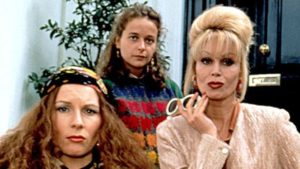
Of of all the things the younger generation, the so called ‘Millenials’, could do to rebel, who would have thought that eating healthy food would be high up on the list? How dare they turn their backs on junk food and bad health? Who said they could have a conscience, want to save the environment and animals? It’s like Edina and Patsy in Ab Fab looking as Saffi and wondering where they went wrong? How dare they be so good?

Stories are regularly appearing in the media about the dangers of ‘clean eating’. Attention grabbing headlines claim the younger generation are enslaved to the fashionable myth of super-healthy food, in peril of becoming malnourished and even mocked for eating real food as opposed to prefabricated rubbish. And it’s not just the tabloids; an article in last weekend’s Guardian ridiculed the desire to eat baked sweet potato as opposed to a processed potato waffle. Surely the healthier choice should be supported, not mocked?

But what is really happening? Despite it’s well known dangers and drawbacks, I believe that social media is empowering young people to become super-aware of what is going on in the world, enabling them to question what they are told as ‘fact’, what is real and deciding what is right and wrong.  If you’re in the next generation up, it’s good to know what is out there yourself, to enable you to have a level and balanced discussion with your off-spring. Having an open mind is a good thing!

Of course the internet brings it’s own dangers; these are the negatives that hit the headlines. Young minds are impressionable. I have come across teens who believe they can survive on juice alone for ever more. Or who follow ‘Banana Girl’ who claims to eat up to 50 bananas a day. Neither is sustainable or healthy. And using the term ‘clean’ when it comes to healthy food does imply that others are dirty or ‘bad’. It’s certainly not terminology I ever use – apart from anything else, a bit of dirt can actually be good for us, but that’s another story!

What about the positives? Awareness of issues in the food industry, the environment, in the world as a whole – is that not good?

There is no denying that eating disorders remain a big issue; many media scare stories are blaming ‘clean’ eating. But this isn’t a new story.  The deeply embedded and complex psychological problems that lead to serious eating disorders have always been an issue. A multitude of triggers can affect this terrible condition. The ‘modern world’ is always being blamed, whether it’s skinny models, skinny jeans, peer pressure, exam stress (and that was just when I was a teen back in the 80’s). One of my school friends turned orange from eating only carrots. That wasn’t due to ‘clean eating’. That was because she was ill. Blaming a popular movement is looking outside the real issue, not the actual cause. It makes me wonder about the true purpose of media scare stories……..

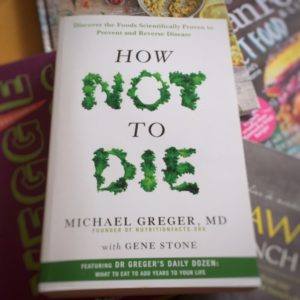
Move away from the headlines, and what do you find? Lots of science that backs up the claims that eating a mainly whole food plant based diet is the best way to stay healthy and fit. Is it really that radical or surprising that eating lots of vegetables and whole foods, i.e.: real food, is a good thing?  And if you happen to have already picked up one or more of the chronic health problems that are connected to poor ‘lifestyle’ choices, or have food intolerances or allergies, then guess what – a plant based diet can even help reverse the problems. To see how much of a difference it can make, check out Dr Micheal Gregor’s great book How Not to Die!

And if you think that eating a whole food plant based diet is restrictive or boring, then have a look at my recipes – there’s nothing boring there! They’re also family-tested, and real too! No risk of malnourishment in my kitchen. There will be more coming soon in my book The Sensitive Foodie. Or if you want to get in the know right now, then come on one of my Eat Well Live Well courses to find out more.

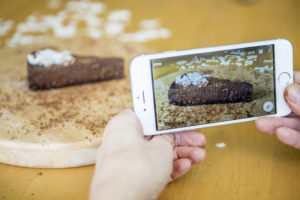
As to all the negative stories in the press, I would take it with a pinch of (Himalayan?) salt! Let’s support our Millennials just a bit more, and join in the fun. And if you’re worried about your young person eating too many veg, just embarrass them in public by snapping your lunch and posting it on Instagram. They’ll be heading for the sex, drugs and rock and roll before you know it!


A question of tolerance

When I was eight years old, there were two things I wanted to be when I grew up. First was be a nurse. I had a great dressing-up nurses uniform which I loved to wear, and liked to help other people, so figured nursing was for me! 10 years later I discovered the uniform really wasn’t that good, that it involved a lot more than just ‘helping people’ but generally found the job fascinating and rewarding. Eight year old me was right on that one!

The second thing I wanted to be was a writer. My parents had given me a bright pink Petite typewriter for Christmas and I just loved tapping out random stories and reports, using up piles of paper and inked ribbons. I’ve continued my love of communicating through words, but have never completely followed my passion through; there’s always been something else to do. Blogging as The Sensitive Foodie has been a great way of scratching the writing itch whilst I’ve ran courses and workshops about eating great food, but now it’s time to take the next step,

So I’m really excited to say I’ve started writing my first book! Naturally it’s all about food intolerances and eating amazing food for health, with lots of lovely recipes for the reader to get stuck in to – many new ones not posted on this blog. I’m using the summer to sit down and throw all my efforts into this new project – I just need not to get distracted by the sunny days!

Whilst brainstorming my ideas, I keep coming up with a nagging question about the word intolerance, or rather it’s opposite, tolerance. Food sensitivities and intolerances have become more main-stream recently, but are still regarded with an unfair amount of negativity. But in my mind, most people have foods they don’t eat; is that because they cannot tolerate them? Maybe it’s our understanding of the word intolerance that’s the issue.

Anyway, to satisfy my curiosity, I created a survey. Whilst definitely not scientific research, the response so far is fascinating. If you haven’t already given it a go, please spare 30 seconds of your time (literally) and click here https://www.surveymonkey.co.uk/r/66J79MV to access. The larger the amount of responses, the more realistic the answer. The survey is anonymous, so I can’t credit you personally in the acknowledgements, but will really appreciate it non-the-less.

Meanwhile, with help from an excellent writing boot camp by Alison Jones (www.alisonjones.com), I will carry on creating my first book, attempting to see if eight year old me was right in my secondary career choice.