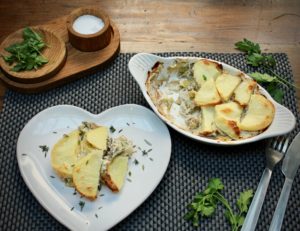
Creamy leek and mushrooms bakes

One of the things I really missed when I changed to a dairy-free, whole food way of eating was creamy sauces, especially the type used for pie. At first, I didn’t know how to create that sumptuous richness and depth without using a whole load of dairy or fats.

After lots of trial and error, I have to say this is my favourite – a delicious leek and mushroom creamy sauce made with a combination of soaked cashew nuts and silken tofu that gives the right balance of lightness and creaminess. And the white wine helps as well!

One of the difficulties with food intolerances is that one recipe doesn’t always work for everyone. I strive to make my recipes flexible for everyone, so if you’re nut-free, just use all tofu, if you are soy-free, just use all nut but add more water. If you are yeast-free, then I’m sorry the wine is out – replace the fluid with a good quality vegetable stock instead. If you are nightshade free, try celeriac slices on top instead. And if you don’t like mushroom, or leek, then use your veggies of choice. Sorted!

This may seem like there’s lots to do, but time-wise this will take you about 40 minutes in total, so why not give it a go and indulge in some super-tasty creaminess for dinner this week? Enjoy.

Creamy leek and mushroom bakes (serves 3-4)
3 medim sized potatoes, washed, skin on
2 good sized leeks, washed and sliced
250g mushrooms, washed and sliced
2 cloves of garlic, crushed
2 bay leaves
1 teaspoon dried thyme
100ml white wine (make sure it’s vegan if you are dairy/egg/fish free)
100g tofu
50g cashew nuts, soaked for a couple of hours
salt and pepper

First cut the potatoes in half, place in a pan of boiling water and cook until you can just about put a knife through them. Drain and leave to cool. Once cool enough to handle, cut into thin slices.

Whilst the potatoes are cooking, pre-heat the oven to 180ºC, then heat a couple of tablespoons of water or a teaspoon of olive oil in the bottom of a medium-sized saucepan and sauté the leeks for 3-4 minutes until they start to soften and brown slightly. Add the mushrooms and garlic, and cook for a few minutes until the juices flow out the mushrooms. Stir in the thyme and pour over the wine. Let this simmer for a couple of minutes.

Drain the soaked cashew nuts and place in a blender with just enough water to cover and the tofu. Blend to smooth then pour into the pan and stir to combine. The sauce will thicken as it heats through. Season with salt and pepper.

Once the sauce starts the stick to the side of the pan, turn off the heat and pour into one large serving dish or 3 individual ones. Cover with the potato slices, making a pattern if you so wish. Place in the oven and bake for 15-20 minutes until lightly browned on top. Serve with a selection of green vegetables.


Sweet potato, spinach and chickpea curry

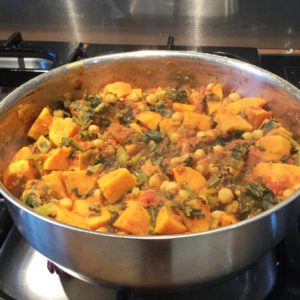
Veggie curries are always on the menu in our house. They can be super quick and easy to make as well as full of rainbow plant based ingredients packed with nutrients and flavour. They are also perfect for using up veggie odds and ends that you don’t know what else to do with, thereby cutting down on food waste. And of course they are easy to make dairy and gluten free.

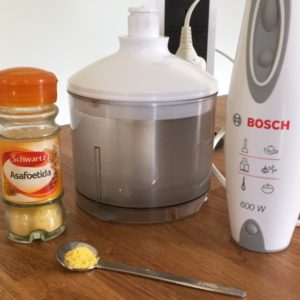
Whilst in India, I learnt some top tips about prepping for curries that made life easier, as there can be rather a lot of peeling and chopping. That’s where a small blender comes in handy for getting ingredients like onion, ginger and garlic ready – a quick peel, a couple of rough chops, a little tip into the blender pot and a few whizzes later you have a fine dice ready to cook. If you add a little water, you can also create your own paste, cutting out the need for any oil if you want to go oil free too. And as the veggies are prepped small, they don’t take as long to cook, saving you time.  It also makes the sauce smoother, especially useful if you have someone in the house fussy about lumpy bits!
I also discovered asafoetida in India, otherwise known as Hing (which is much easier to say and spell!). This is another India spice commonly used in veggie dishes that has a very pungent and savoury flavour. In fact, if you take a sniff of the pot, it may put you off. But in cooking, it mellows out and adds a depth to the taste of your dish. You can buy it in most larger supermarkets or local Indian stores. And you only need a little, so a pot lasts a long time. It’s really worth a try.

Asafoetida aids the digestive system, as does ginger and cumin, also part of this dish. Add that with the anti-inflammatory properties and general fabulousness of turmeric, this dish is not only wonderfully tasty, but can help the body heal too. That’s even before the impressive phytonutrients found in the sweet potatoes and spinach are looked at.

So why not give this rainbow curry a go one evening and let the flavour soothe your tastebuds and the magic within soothe your body!

Sweet potato, spinach and chickpea curry (serves 4)
1 onion
2 cloves garlic
1 red chilli
1 inch piece fresh ginger
a pinch of asafoetida/hing
1/2 teaspoon ground turmeric
3 medium sweet potatoes, peeled and chopped into chunks
400g tin chickpeas rinsed and drained
400g tin chopped tomatoes
200g spinach, washed and roughly chopped
salt and pepper to taste.

Peel the onion, garlic and ginger. Chop a couple of times and put in the bowl of a small food processor. Wash the chilli, deseed and chop a couple of times then put in the pot. Blitz for a few seconds until chopped into tiny pieces.

Heat a large pan on a medium heat and sprinkle the asafoetida on the bottom for a minute until you smell the pungent aroma. Add a little oil or water then tip in the blitzed veg. Sauté for a few minutes until soft and starting to brown – don’t let it burn or the garlic will be bitter. Add the tomatoes and turmeric and simmer for a couple of minutes, then stir in the sweet potato and cover with the tomato sauce. Add a little extra water if needed, but not too much as you want a dryish curry. Turn down the heat, pop on the lid and simmer for 10 minutes. Add the chickpeas and simmer again for another 10 minutes until the sweet potato is cooked. Stir in the spinach, pop the lid back on and simmer for another couple of minutes until the spinach is fully wilted and incorporated.

Season with salt and pepper as needed and serve with some steamed brown rice or chapattis. Enjoy!

Christmas chestnut tartlets

I don’t know about you, but this year seems to have gone by so quickly! Christmas is nearly upon us once again. By now, most people have the decorations up, the presents bought (or maybe not!) and know who’s cooking that amazing festive feast on Christmas Day.I usually cook up a flavour-packed nut roast as my plant based alternative to turkey (see http://foodiesensitive.blogspot.com.au/2012/12/planning-christmas-dinner.html for a good basic recipe). Some may say it’s not the same, but a special feast is what you make of it, not necessarily what tradition dictates! If you so desire, there are some tasty meat-alternatives out there such as the Vegusto rustic roast (made with wheat protein) or Tofurky (wheat and soy protein), but they’re not my kind if thing, even before I went gluten free. Eating plant based and wholefood is about packing in real food, not processed products infused with a variety of chemicals.

This year though, I wanted to create something slightly different, something sumptuous and packed with Christmas flavours. And what’s more Christmassy than chestnuts and cranberries? So I put together this gorgeous little tartlet for my December supper club, and have to say am rather pleased with the results.

Chestnuts are an underrated nut! Lower in fat and higher in starches than most nuts, they are popular with those who believe that low fat, high carb is the way to lose shedloads of weight (remember Rosemary Conley’s Hip and Thigh diet??). Although this approach is no longer de rigueur and despite their low fat content, they’re still good sources of mono-unsaturated fatty acids, but also fibre, manganese and vitamins B and C.

Cranberries are well known for being good for bladder health, and dried can be as good as fresh, although some of the vitamin C is lost. The problem is that sugar is often added to make them more palatable, but a small amount is fine. Just try not to nibble the rest of the packet whilst you’re cooking!

The filling is also gluten free, so as long as you use gluten free pastry as well, then you’ve got a fully free from dish (unless someone has a nut allergy!). I’m currently experimenting with gluten free flours – with this dish, I’ve found a pastry made with brown rice flour works the best, but that’s another blog post!

So why not give this a go? It does take a little time, but can be made in advance then reheated when you’re ready, giving you more time to open presents and drink bubbles! Merry Christmas!

Chestnuts, cranberry and mushroom Christmas tartlets (makes 6)
1 portion shortcrust pastry (homemade, Just-rol, gluten free)
1 teaspoon olive oil
1 large red onion, diced
2 cloves garlic, crushed
260g chestnuts (I used 1 ½ packs of Merchant Gourmet whole chestnuts)
3 medium carrots, grated
2 teaspoons thyme
1 pack parsley, stems separated from leaves and finely chopped
3 tablespoons dried cranberries
200g chestnut mushrooms, finely chopped
tamari
salt and pepper
2 tablespoons dairy free cream cheese or non-dairy cream
To make the filling Heat the olive oil in a pan and sauté the onion and thyme until the onion is soft (if it starts to stick, add a little water. Add the garlic and cook for a minute. Add the carrot and chopped stems of the parsley, mix well and cook for another minute. Stir in the chestnuts and mushrooms and cook until the fluid from the mushrooms has evaporated. Add the cranberries, a few dashes of tamari and season with salt and pepper. Stir in the cranberries then add the cream cheese/non dairy cream and chopped parsley leaves and cook for another few minutes until it all comes together. Taste and add additional seasoning and tamari as needed.Pre-heat the oven to 180ºC. Roll out your pastry of choice to about 1/2 cm. Place a tartlet tin on to the pastry and cut around it with a 1 ½ cm extra rim. Remove the tartlet tin and carefully pick up the cutout piece and flip it over into the tin. Press the pastry into fit, pinching any breaks together and trim the edges. Brush with some dairy free milk or a chickpea flour wash (mix a tablespoon of chickpea flour with some water to get a milk-like consistency). Repeat the process until all the pastry is used (should be enough for 6).  Place the tartlet tins on a baking sheet and place in the oven for 6 minutes.

Remove the pastry from the oven then fill with the mixture. Put the tartlets back into the oven and bake for another 10 minutes or so until the pastry feels firm and the top of the tartlets starts to brown slightly. Remove from the oven, leave to cool slightly so you can remove the tartlets from the tin without burning yourself and serve with all the Christmas veg. This works well with onion gravy with some redcurrant jelly stirred in, although I used homemade rosemary jelly – yum!

A wee bit of vegan haggis

It’s this time of year that anyone you know who is Scottish, or has some Scottish heritage, or just fancies a mighty fine feast on a cold winters night, celebrates Burn’s night. Held in memory of the poet, Robbie Burns, the evening has many traditions, including piping in the diners (if you happen to know anyone who plays the bagpipes of course!), drinking lots of whiskey and eating haggis.

When I was young, I used to think that haggis was a small furry animal, but actually its a mix of sheep offal mixed with onion, oats and spices, then stuffed in a sheep stomach and simmered in a pot for 3 hours. I have eaten it a couple of times in the past and its rich and seriously filling.

These days, however, being a plant based eater, haggis is generally off the menu, although vegetarian ones are sometimes available in the supermarket. On a recent trip to Edinburgh, however, we stopped at a fabulous vegetarian restaurant called Henderson’s and my husband chose a delicious haggis dish. In fact it was so good, he decided to recreate it at home for a birthday dinner party the other week. Served with mashed tatties and neeps, it was our own little plant based Burns night supper, super tasty and super healthy.

Once made up, the haggis mix does look a little grey and unappealing, despite it’s amazing flavour, and not having any plant versions of sausage skins to hand (are there any?) we decided to wrap it up in some filo pastry to create a haggis parcel. The contrast of the thin, crisp pastry and the soft, slightly claggy texture of the haggis worked fabulously.

Update 2018 – to make this gluten free, it’s delicious baked as it is without the filo pastry. Just pack the mix into a lightly greased pyrex bowl, cover it with foil and bake it in the oven for 20 minutes. Uncover and bake for another 20 minutes, then leave to cool for a couple of minutes before tipping out and serving in chunky slices.

The combination of lentils, kidney beans, mushrooms and oatmeal means this dish is packed with protein and fibre, as well as magnesium, manganese and folate amongst other minerals and vitamins. Serve with mashed potatoes and swede for a nearly authentic plant based Burns night supper.

Vegan haggis (Henderson’s of Edinburgh recipe)
75g chopped mushrooms
75g brown lentils
50g porridge oats
50g cooked kidney beans, chopped
25g non-dairy spread (Vitalite/Pure)
150g grated carrots
150g onion, finely chopped
2 cloves garlic, chopped
1 tablespoon olive oil
1 tablespoon tamari
1 tablespoon garam masala
salt and pepper
1 packet of filo pastry sheets.
First, soak the brown lentils for 2-3 hours to soften them and soak the oats for 1 hour before you start. When you’re ready, heat the oil in a pan and sauté the onion until soft, followed by the garlic, garam masala and tamari. Season with salt and pepper.

Drain the lentils and add to the pan along with the grated carrot. Simmer on a low heat until the lentils are soft, stirring regularly to prevent sticking. You may need to add a little water to stop the mix drying out. Next add the mushrooms and cook until soft, followed with the kidney beans, the non-dairy spread and some more black pepper. Stir well to combine.

Finally, rinse and drain the oats and stir into the mix. This gives body to the haggis. If you are going to wrap your haggis in filo pastry, leave to cool. Otherwise, you can eat as it is.

Once the mixture is ready, lay out a sheet of filo pastry, leaving the rest covered with a damp tea towel so it doesn’t dry out. Pop a couple of spoonfuls of the haggis mix at one of the short ends of the pastry, fold up the sides and roll into a parcel, sealing the end with a bit of water. You could make square parcels if you prefer – it will still taste delicious! Repeat the process until all the pastry sheets are used up, lay out on lightly greased baking trays and brush the top with some non-dairy milk to help them brown. Pop into a pre-heated oven at 180oC and bake for 15-20 minutes until the pastry is golden and crisp.

Serve with mashed potatoes and turnips or swede and enjoy a great imitation of “the great chieftain o’ the puddin’ race”!

Curry comfort

Our time living in Indian widened our horizons in many ways. Food wise, we discovered a cornucopia of different South Indian ‘curries’ most of which we had never come across before in the UK. Most curry houses in the UK serve North Indian, Bangladeshi or Pakistani routed food, adapted to the British taste (lots of sauce!). These dishes tend to be rich, tomato based, heavy with cream and featuring meat. South Indian food consists of a huge amount of vegetarian dishes, many enhanced with coconut, either milk or freshly ground, making them rich but not heavy.

Coconut is a regular ingredient on my blog – I love it, not only for it’s wonderful creamy taste, but it’s amazing health benefits. Coconut meat and milk are high in fat, there’s no getting away from it, but the fat is medium-chain saturated fats which research shows is actually health promoting rather than detrimental like many saturated animal fats. And of course, being plant based, it contains no cholesterol, a fact my friend was surprised about when I told her. Placed on a cholesterol reducing diet by her GP (better than being given statins that’s for sure), it was on the list of food to avoid due to  it’s high cholesterol content. In fact the oil in coconut helps improve a person’s cholesterol, increasing healthy HDL cholesterol.

Lauric acid is one of the main fatty acids in coconut; this converts to other compounds in the body and had an array of beneficial effects including acting as an anti-viral, anti-bacterial and anti-fungal and if eaten as coconut meat, the fibre promotes these properties, contributing to a healthy gut.

I love to make vegetable Malabar curry on a cold and windy day as there’s just something so warming and comforting about it. Rich and flavoursome, I feel wrapped in a soothing warmth. Malabar curries come from the Kerala area, often as a fish curry. Although truly Indian, it has Chinese roots and developed along the coast. The warm, comforting element comes from the inclusion of a mixture of cinnamon, cloves and cardamom, all medicinal herbs in their own right. Cloves have an anti-inflammatory effect as well as a mild anaesthetic (oil of cloves for toothache), cinnamon has compounds that aid digestion and help reduce muscle spasm (amongst other effects) and cardamon is sometimes used as an anti-depressant.

Make this super healthy by using red, orange and green vegetables, packed full of nutrients and anti-oxidants to keep the winter bugs at bay. And of course by using coconut, it’s completely dairy free.
Although there is a long list of ingredients in this recipe, it’s actually pretty easy to make. You can buy a malabar curry mix from your local Indian store, but be careful, as these can contain a large amount of salt. It’s pretty easy to make your own, so I make it fresh each time. Serve this up on a blustery evening with a warm roti or pile of steamed rice (brown of course!) and let yourself be enveloped with a soothing warmth which, with any luck, will transport your mind, if not your body, to warmer climes.

Vegetable Malabar Curry<
Spice mix:2 teaspoons ground cinnamon
2 whole cloves
4 cardamon pods
Vegetable mix:
1 teaspoon olive oil
1/4 teaspoon black mustard seeds
1 spring curry leaves
Asafoetida – pinch (miss if you can’t find it)
1/2 teaspoon turmeric
1 teaspoon chilli powder
1 tablespoon fresh grated ginger
2 onions chopped
2 fresh tomatoes, pureed
1 cup chopped carrot or sweet potato
1 cup green veg (beans, broccoli)
couple of handfuls sweetcorn or peas
1 tin coconut milk
up to 1 cup warm water
fresh coriander to garnish
First, make your spice mix. Bash the cardamon pods in a pestle and mortar to release the seeds. Grind seeds with the cloves until fine and mix in the cinnamon.

Heat the oil in a large pan and cook the mustard seed, asafoetida and curry leaves until the seeds splutter. Add the onion and ginger and cook until the onion is soft. Pour in the pureed tomatoes and a pinch of salt, and cook for 10 minutes. Stir in the chilli powder, turmeric, spice mix, vegetables and mix well to coat. Pour in the water and simmer with the lid on until the vegetables are cooked.
Turn off the heat and pour in the coconut milk. Stir well and heat on a low flame for a few minutes. Season with salt and pepper as needed, sprinkle the fresh coriander over the top, and enjoy

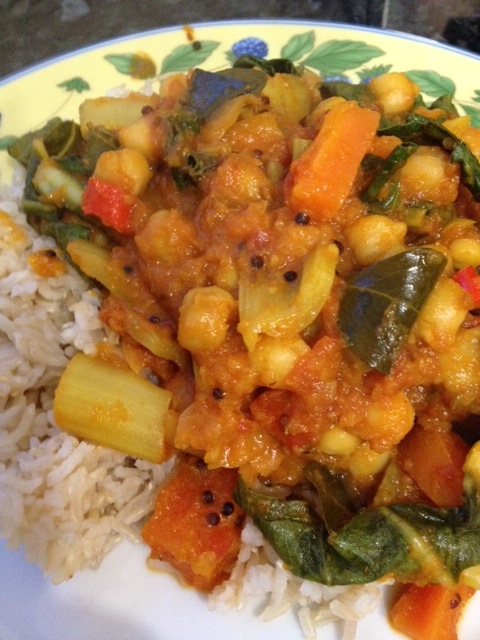
Channa masala – dairy free and delicious!

One of the main benefits of living in India was of course picking up top tips on how to make a good curry. Before we left for Bangalore, I had eaten channa masala from an English curry house, but it was buttery and the spices harsh. I’ve since realised that harsh spices are uncooked ones, and a good channa masala can be dairy free and gorgeous!

In case you’re wondering, channa is my old favourite, chickpeas! Known a garbanzo beans in the US, this fabulous pulse is so worth incorporating into your diet wherever you can as they are incredible little nuggets of nutrition. For a start, they are a great source of protein, not complete as the essential amino acid histadine is missing, but when combined with wholegrain rice or flour pack a serious protein punch. On top of that, they have loads of fibre, so not only help to keep you full for long, but can aid in reducing cholesterol levels as well as promote a healthy gut.Chickpeas are also a great source of folate, particularly important for women of child-bearing age, iron, phosphorous, zinc and manganese, which is essential for energy production in the body. They are low in fat but still have essential fatty acids and contain other nutritional necessities such as potassium, vitamin C, calcium and other B vitamins to name a few.

From a financial point of view, chickpeas are also pretty cheap, certainly as a protein source (much more affordable than meat!). Canned are more convenient than dried, although this convenience carries a cost; financially they are more, environmentally there’s the can and nutritionally up to 45% of the folate is lost in the canning process. But then sometimes there’s just not time to soak and cook, even with a pressure cooker at hand!

My channa masala recipe is not really traditional, as it contains more than just chickpeas, tomatoes and spices. As my family will always tell you, I like to add in some extra veg in everything, especially something green!

So top tips for cooking this channa masala are:

* blend the onion, garlic and ginger into a puree before cooking – this gives a smooth sauce and reduces the amount of oil you need and reduces the chance of burning
* add the spices once the onion mix is cooked, stirring well for a minute to help them cook
* add the chickpeas near the end so they don’t over cook – the flavour is in the sauce, not the pulses
* use your nose as well as your tongue to tell when the spices are cooked – the pungent, harsh aroma softens when cooked.

So that’s about it – here’s the recipe. The spice amounts are a guideline only – use less or more depending on how flavoursome you like your curry. Serve with brown basmati rice or wholemeal roti and enjoy!

Channa masala
1 onion roughly cut
3 cloves garlic
1-2 inch cube fresh ginger
1 tablespoon olive oil
1 teaspoon black mustard seeds
1 teaspoon cumin seeds
1 chilli diced – red or green, its up to you
1/2 teaspoon ground turmeric
1 teaspoon chilli powder
1 teaspoon ground cumin
salt
2 carrots cut into small chunks
400g tin chopped tomatoes
400g tin chickpeas or 1 cup soaked and cooked
spinach or chard, chopped
Put the onion, garlic and ginger into a food processor and whizz until finely chopped/pureed. It becomes pretty smooth and watery. Then heat the oil or water in a pan and add the whole seeds, stirring occasionally. Once they start to pop, reduce the heat and add the onion mixture, stirring constantly so it doesn’t burn. Cook for about five minutes until the fluid starts to reduce, then stir in the other ground spices and salt (I use about 1/2 teaspoon) and cook for a minute or so, stirring constantly. Add the chilli and carrot, covering them with the mixture, then pour in the tinned tomatoes, mixing well, adding a little water to wash out the tin. Your mixture should be a thick stew, not too watery but not too dry. Once boiling, reduce the heat and leave to simmer for 20 minutes or so. Taste to check the flavour and if the harshness has gone, add the chickpeas and cook for 5 minutes, then add the chard or spinach and cook for a couple of minutes more. The curry should now taste rich and delicious, so serve it up and enjoy!