It’s all kicking off in my new veg patch at the moment. After a slow and uncertain start, everything seems to have had a burst of energy and become very productive. Which is great as there’s something amazing about picking your own veggies then eating them still full of vitality and flavour. Continue reading “Baby kale and pea pod salad”
Tag: cruciferous vegetables
Getting the most from your greens plus a quick curry
I have a big pile of food-related books to read, each with a different focus and all fascinating. Currently, I’m working my way through ‘How Not To Die’ by the wonderful Dr Michael Gregor, who has a head full of knowledge, a bag-load of common sense and a fabulously dry sense of humour (plus lots of bowel humour – it’s a nurse thing!).
Dr Gregor does an amazing job of examining all the latest research about food and health, questioning the validity of the conclusions and providing clarity for anyone interested in eating good food – that is, food that is good for you! His website – nutritionfacts.org – is packed full of 5 minute videos covering all sorts of topics, checking the facts behind the headlines and challenging spurious claims found in newspaper headlines and on-line. There is so much confusions out there, it’s hard to identify the ‘truth’!
You may have noticed that I’m a big fan of cruciferous vegetables, wonderful produce like broccoli, cabbage of all sorts, cauliflower, kale and watercress. Dr Gregor is too and regularly refers to research findings about how the sulphur-containing compounds found within these veggies can promote good health, particularly in preventing and even treating some types of cancer, supporting the immune system and liver function (there’s many others too). Broccoli has been researched the most, but all cruciferous veggies contain the beneficial phytonutrient sulforaphane. But there is a potential problem in accessing it – for sulforaphane to become available, it needs to be activated by another chemical reaction involving an enzyme (myrosinase). This occurs once the broccoli or other cruciferous veg is cut or bitten into. All ok so far. The problem is how we tend to eat this group of veggies – cooked. Heat kills myrosinase – and no myrosinase, no magical sulforaphane. But who really likes to eat lots of raw broccoli? I know I’m not keen!
Fortunately, there is something you can use to overcome this problem – patience! Sulforaphane is heat resistant, so cooking is not an issue, you just need time for it to form. So to get the most magic out of your broccoli, just chop it and leave for 30 minutes or so before you cook it. This gives plenty of time for all the enzymes to do their business and create lots of this wonderful phytonutrient that your body will just love. It does mean you have to plan ahead a little, but if you’re cooking other things as well, just remember to chop the broc first, then get on with the rest of it. Then you can cook it however you like, although please don’t boil the life out of it, especially if you are using food to manage a health problem, as there are other wonderful nutrients inside that will suffer. Also, if you’re trying to persuade your kids to eat veg, serving up soggy offerings is not going to help (remembering granny’s over-cooked Christmas sprouts!).
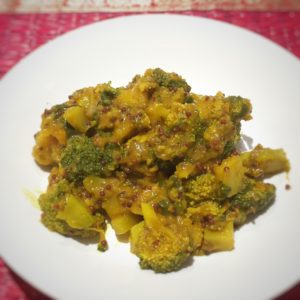
So try to remember to give your greens time to brew to get the most out of them – you won’t notice the benefit, but your body will. Here’s a quick curry recipe featuring brilliant broccoli to try out this weekend. Packed full of flavour and amazing nutrients, eating well never tasted so good!
Broccoli and squash curry (serves 4)
1 head of broccoli
1 medium onion
1 large clove garlic
2cm chunk ginger, peeled
½ teaspoon cumin seeds
½ teaspoon black mustard seeds
1 small squash
½ teaspoon turmeric
½-1 teaspoon red chilli powder (depending on heat requirements)
salt and pepper
fresh coriander
First, rinse the broccoli and chop of the stems and dice. Chop the broccoli heads into small pieces and put to one side to allow the phytonutrients do their thing.
Roughly chop the onion, garlic and ginger then place in a small blender and blitz into a paste with a little water. Wash and peel the squash. Chop into small chunks/bite sized pieces.
Place a pan on a medium heat and add the mustard and cumin seeds. Dry toast them for a couple of minutes until they release a lovely aroma and start to pop. Take the pan off the heat for a moment and stir in the paste mix (if the pan is too hot it will burn). Pop the pan back on the heat, turning it down a bit, and sauté for a few minutes until the paste starts to lightly brown. Stir in the spices with a little water and continue to cook for another couple of minutes.
Add the chopped squash and broccoli stems along with some salt and pepper and stir well. Add about 50ml of water, bring to the boil, then pop on a lid and reduce the heat. Simmer for 15-20 minutes until the squash is soft. If the mix is dry, add a little more water along with the broccoli heads and simmer for 5 minutes or so until the broccoli is lightly cooked through (I still like it with a bit of bite). Turn off the heat and garnish with chopped fresh coriander. Serve with dairy-free yoghurt, rice or whole-wheat chapatti.
Incredible cruciferous part 2
My last post “Incredible Cruciferous” http://thesensitivefoodiekitchen.com/incredible-cruciferous/ looked at the range of veggies to try in this group and their amazing nutritional properties, as well a few suggested recipes to try out. This time, I want to share some top tips on how to get maximum benefit from these gorgeous vegetables – and a new recipe idea to try out too. Continue reading “Incredible cruciferous part 2”
Incredible cruciferous
If you’ve been reading my blog for a while, you’ll know by now that veggies are a main part of my daily diet. Packed full of super healthy vitamins, minerals and phytonutrients, it’s really important to ensure a selection of vibrant veg are on the plate every day to keep healthy and strong.
Whilst all veggies are good, there is one particular group which are superbly good – cruciferous vegetables. This lovely bunch has been attracting a lot of research recently as they have been found to be particularly good in protecting against and even treating many chronic Western health problems.
So what’s in this diverse vegetable family? There’s a lot to choose from – if you’re not too keen on one, you can find another equally good one to add to your essentials list:
Cabbage – including Chinese cabbage such as bok choi and spring and summer greens
Kale – all types 
Brussel sprouts
Broccoli
Cauliflower
Swede and turnips
Watercress
Radish, include horseradish, wasabi and daikon
Rocket
Kohlrabi
Mustard greens and seeds.
What is it about this group that makes them so healthful? For a start, they have fabulous amounts of vitamin C, E and K, and folic acid, as well as contribute a high amount of fibre, which is essential for happy, healthy guts. Dietary fibre contributes to reducing a number of health problems, including high cholesterol and (the obvious) constipation. But on top of that, cruciferous vegetables contain amazing sulphur containing phytonutrient compounds that help the body to resist chronic health problems and stay healthy. The Linus Pauling Institute in America states that active biological compounds found in them can help reduce inflammation, protect cell DNA and can protect against some cancers, which makes eating a portion of cabbage worthwhile!
The great thing about this group of vegetables is that it’s pretty easy to include in the diet every day; all parts of the plants can be eaten (cauliflower is the flower part, turnip the root and leaves) and as many are traditionally found all round the world in different forms, there’s a whole host of different recipes and flavours to try out. So it’s not about having to force yourself to eat a school dinner’s special of soggy, overcooked cabbage every day, but rather start an exiting journey of discovery that’s great for the taste-buds as well as the body.
Here are a few ideas to try out:
- Add some extra bok choi and broccoli florets to a stir fry
- This gorgeous Indian cabbage recipe – http://thesensitivefoodiekitchen.com/tasty-cabbage-indian-style/
- Add some extra rocket on top of a pasta dish or pizza
- Make some super quick but delicious watercress soup – try this recipe http://thesensitivefoodiekitchen.com/two-soups-dairy-free/
- Pop some swede in your mash potato
- Cook a dahl that has mustard seeds in the seasoning – here’s a simple yet delicious one to try http://thesensitivefoodiekitchen.com/dal-or-lentil-its-a-name-thing/
- Add some kale to your smoothie
- Make a coleslaw that includes cabbage and/or kohlrabi – this one is really tasty http://thesensitivefoodiekitchen.com/yet-another-slaw-recipe/
- Be brave and add a little extra wasabi to your sushi!
One post is too short to share the glories of this wonderful group of veggies – next time I’ll give you some top tips on getting the most benefit out of these veg plus a new recipe to add to the list. In the meantime, why not try one or all of the above – and let me know how you get on!
Eat your greens – they really are so good for you!
Remember growing up and being told to eat your greens? That they would make you grow big and strong? Well, it’s true! In fact, there’s been some research that shows that cruciferous vegetables contain unique sulphur containing compounds that convert to isothiocyanates (thankfully shortened to ITC!!), phytochemicals that have immune boosting, anti-cancer effects.
Cruciferous vegetables, so called because their flowers have 4 equally spaced petals that form a cross shape, include kale, cabbage, collard or spring greens, cauliflower, brussel sprouts, turnips, broccoli and watercress. The sulphur containing compounds are kept in the cell walls – this is what gives these veg a slightly pungent, bitter flavour. Clever scientists have discovered a complex chemical process which is triggered when these veg are chopped or chewed; the sulphurous compounds are released and mix with an enzyme forming the wonderfully dynamic ITCs.
So what do ITC’s do? Apparently there are 120, all different with different actions; combined together they have been found to be anti-inflammatory, antioxidant, immune boosting and anti-cancer, removing carcinogens and killing cancer cells. Broccoli, for example, can stop cancerous changes that occur within the cell, protecting it from DNA damage. Cruciferous veg fuels the bodies natural protective processes, turning on its internal defences. One study found that a 20% increase in green veg lead to a 40% decrease in cancer rates* – pretty good stuff!
Apart from fighting against cancer, these veg stimulate the immune system to help protect against viruses and bacterial infections, helps the cells to process toxins and waste, help prevent heart disease and generally reduces the general effects of ageing. No wonder we are told they are good for us!!
The enzyme that’s required to form ITCs is destroyed by heat, but ITCs themselves are not, so cruciferous vegetables are best chopped and blended first and either eaten raw (in a juice for example) or added chopped or pureed into stews, soups etc. Alternatively, veg like cabbage or broccoli can be lightly steamed to keep as many goodies active as possible.
Of course, the veg also contain an array of other nutrients such as vitamin B, C, magnesium, iron, calcium, fibre – the list goes on! So they really are an amazing powerhouse of goodness. All these goodies aid the body to detox and heal, so great for overcoming food intolerances and allergies as well as other chronic diseases. When I was in India I had massive cravings for green vegetables, and even stir fried cauliflower leaves to satisfy them. Eating a minimum of 2 portions of cruciferous veg a day is recommended which is pretty easy if you have access to a wide variety of produce, not so easy if it means eating cabbage every day!! Mind you, there are lots of ways to eat cabbage….. And in the days things that shouldn’t be eaten, isn’t it great to have something we can eat more of!
A bag of Swiss Chard turned up in my veg box last week, one type of cruciferous veg. Chard has a deep, earthy flavour and works well with garlic, tomato and lemon. So I threw together this dish and it tasted rather wonderful – a hearty, warming weekday supper.
Swiss Chard and white bean stew(ish)
300g (or so) swiss chard, wash and roughly chopped
1 onion sliced
1 tablespoon olive oil or veg stock
2-3 cloves garlic chopped
1 tomato sliced
1 400g tin cannelloni or flageolet beans rinsed and drained
lemon juice
salt and pepper
Heat the oil or veg stock (if you’re wanting a fat free dish) in a pan and fry the onion on a low heat until it’s soft. Add the garlic for a minute, stirring so it doesn’t burn. Throw in the swiss chard, adding a little more veg stock if necessary, and cook for a few minutes until it starts to soften. Add the tomato and then the beans, and cook for a couple more minutes. Turn off the heat, add lemon juice and seasoning to taste and serve with mash or warm bread (or toasted flat bread if you’re yeast intolerant). Simple, healthy and delicious, all in one!!
* Michaud, D et al (1999). Fruit and vegetable intake and incidence of bladder cancer in a male prospective cohort. J Nat. Cancer Institute 91(7).